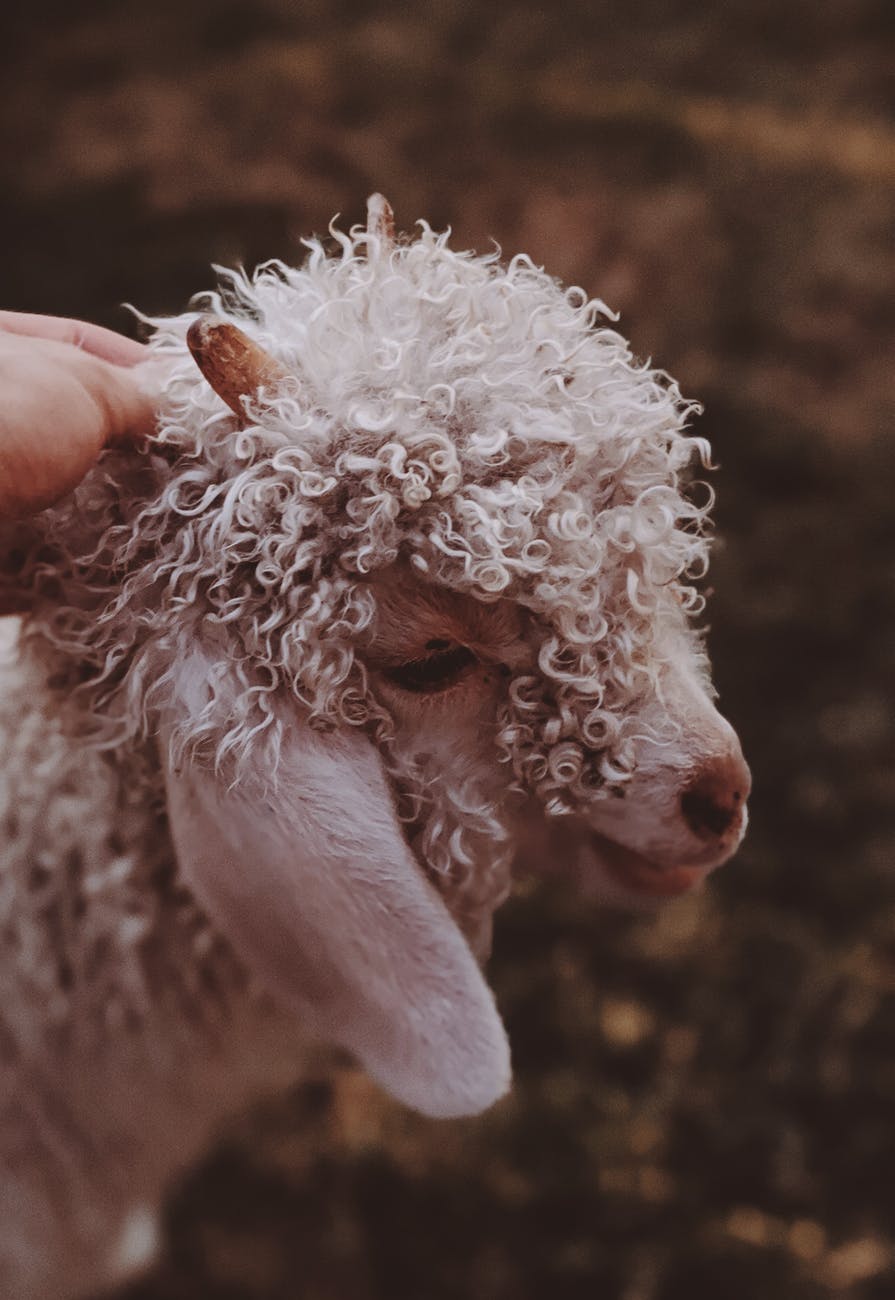
Imagine being born perfect without any physical and mental blemish. Better yet, imagine being a bull, or sheep, or ram who was born perfect. Imagine being cared for your entire life. You ate the best of food, and you slept in the coziest of places as far as places where sheep sleep goes. You know your shepherd; he has always taken care of you. One day, he takes you for a walk, away from the flock. Undoubtedly you are favored because he chose you. You stood out because of your perfection.
He has you on a leash, or better yet, he carried you to the entrance of the Holy Tabernacle. He brings you to be examined by the priest; moreover, he declares you to be without blemish. Then your shepherd presses his hand on your head and cuts you open while the priest collects your blood. Until this day, the shepherd treated you with the best care, but today, he offered you as a sin offering.
Let’s say that all of your life, you knew that the shepherd would sacrifice you to God as a sin offering. What would be your thought process? What if you knew that your lack of blemish is the reason you would get killed? Would you curse your perfection? Would you envy the maimed sheep? Would you long for a defect or a horrible accident? Better yet, would you run away?
When Jesus was born, the Spirit of God was indistinguishable from His humanity because He was God in the flesh. “He is the radiance of the Glory of God and the exact imprint of His nature, and He upholds the universe by the words of His power (Hebrew 1:3). From His birth, He knew His destiny because He was the exact imprint of God’s nature. He knew from His birth that He would die for the sins of many. He tells Nicodemus, “And as Moses lifted up the serpent in the wilderness, so must the Son of Man be lifted up, that whoever believes in him may have eternal life” (John 3:14-15).
Numerous times He warns His disciples that He would be handed over to be killed and rise again on the third day (Matthew 16:21-23, Mark 8:31-32, Luke 9:21-22, Matthew 17:22-23, Mark 9:30-32, Luke 9:43-45, Matthew 20:17-19, Mark 10:32-34, Luke 18:31-34).
Even as a child, He knew who he was and what he was sent to do (Luke 2:49). His entire life, He knew that He would be like a sheep brought to the slaughter. Knowing that the hands of sinful men would kill him, He still taught His disciples and those who would listen. He even tells His disciples to expect the same thing (Matthew 24:9, John 15:19-20, Matthew 5:10-12, Matthew 10:16-18). Yet on the night before He would be betrayed and killed, He was sorrowful and troubled. He spoke to His disciples, and he prayed for them. He knew that he would die within 24 hours, yet he prayed for them.
In the garden of Gethsemane, He was in agony, intense mental and emotional agony because He knew what He was about to face. In His humanity, He prayed, “Father, if you are willing, remove this cup away from me. Nevertheless, not my will, but yours be done” (Luke 22:42-44). He prayed this prayer three times while his disciples, who He asked to keep watch, slept. Yet, at any time, He could have more than “twelve legions of angels” to save him (Matthew 26:53).
Jesus went obediently to His death, but unlike the bull or the lamb, He knew the agony he would face. He knew it because before time began, He obeyed the Father as He ordained it to happen. Like a lamb, Jesus was presented before the High Priest and deemed worthy for death. (Matthew 26:57-68, Mark 14:53-65, Luke 22:66-71). Like the sinful man offering a sin offering, the sinful man laid hands on Jesus and killed him. Jesus bore the wrath of God that was meant for us. Like the pillar of smoke at the altar, His death satisfied God’s wrath. God judged humanity at Mount Calvary with Jesus’ death.
God justified those who accept Jesus as their Christ and Savior. For those who rejected Him, there is no other suitable sacrifice (Hebrew 10:26). Because Jesus is God, death could not hold him, and He arose on the third day. Now, He sits at the right hand of the Father, interceding as our High Priest.
What does that mean to us now that Jesus has fulfilled the law? Well, Jesus tells His disciples to follow him and make disciples of all nations (Matt 28:19). In Luke, Jesus tells them to follow him and carry their cross daily. Jesus expects them to count the cost of following him. This cost means putting Him before everyone and everything in their life, even their life. By doing this, Jesus reaffirmed the first and second commandments (Exodus 20:3-6). His expectations apply to us today.
Jesus tells us that He is the light of the world and those who follow him will always have to walk in the light and never be in darkness (John 8:12). Yet those who do not believe are already condemned (John 3:16-21). Also, we should expect the world to reject us because they rejected Jesus. Even with all His miracles, He was killed on the cross.
If the world hates you, know that it has hated me before it hated you. If you were of the world, the world would love you as its own; but because you are not of the world, but I chose you out of the world, therefore the world hates you. Remember the word that I said to you: ‘A servant is not greater than his master.’ If they persecuted me, they will also persecute you. If they kept my word, they will also keep yours. (John 15:18-19).
In Romans, Paul alludes to the sacrificial system when he implored the early church to present their “bodies as a living sacrifice, holy and acceptable to God, which is your spiritual worship. Do not be conformed to this world, but be transformed by the renewal of your mind, that by testing you may discern what is the will of God, what is good and acceptable and perfect.” (12:1-2). So being regenerated by the atoning sacrifice of Jesus Christ, we are expected to be renewed and transformed and not of this world.
Leviticus 4
And the Lord spoke to Moses, saying, “Speak to the people of Israel, saying, If anyone sins unintentionally[a] in any of the Lord’s commandments about things not to be done, and does any one of them, if it is the anointed priest who sins, thus bringing guilt on the people, then he shall offer for the sin that he has committed a bull from the herd without blemish to the Lord for a sin offering. He shall bring the bull to the entrance of the tent of meeting before the Lord and lay his hand on the head of the bull and kill the bull before the Lord. And the anointed priest shall take some of the blood of the bull and bring it into the tent of meeting, and the priest shall dip his finger in the blood and sprinkle part of the blood seven times before the Lord in front of the veil of the sanctuary. And the priest shall put some of the blood on the horns of the altar of fragrant incense before the Lord that is in the tent of meeting, and all the rest of the blood of the bull he shall pour out at the base of the altar of burnt offering that is at the entrance of the tent of meeting. And all the fat of the bull of the sin offering he shall remove from it, the fat that covers the entrails and all the fat that is on the entrails and the two kidneys with the fat that is on them at the loins and the long lobe of the liver that he shall remove with the kidneys (just as these are taken from the ox of the sacrifice of the peace offerings); and the priest shall burn them on the altar of burnt offering. But the skin of the bull and all its flesh, with its head, its legs, its entrails, and its dung— all the rest of the bull—he shall carry outside the camp to a clean place, to the ash heap, and shall burn it up on a fire of wood. On the ash heap it shall be burned up.
“If the whole congregation of Israel sins unintentionally[b] and the thing is hidden from the eyes of the assembly, and they do any one of the things that by the Lord’s commandments ought not to be done, and they realize their guilt when the sin which they have committed becomes known, the assembly shall offer a bull from the herd for a sin offering and bring it in front of the tent of meeting. And the elders of the congregation shall lay their hands on the head of the bull before the Lord, and the bull shall be killed before the Lord. Then the anointed priest shall bring some of the blood of the bull into the tent of meeting, and the priest shall dip his finger in the blood and sprinkle it seven times before the Lord in front of the veil. And he shall put some of the blood on the horns of the altar that is in the tent of meeting before the Lord, and the rest of the blood he shall pour out at the base of the altar of burnt offering that is at the entrance of the tent of meeting. And all its fat he shall take from it and burn on the altar. Thus shall he do with the bull. As he did with the bull of the sin offering, so shall he do with this. And the priest shall make atonement for them, and they shall be forgiven. And he shall carry the bull outside the camp and burn it up as he burned the first bull; it is the sin offering for the assembly.
“When a leader sins, doing unintentionally any one of all the things that by the commandments of the Lord his God ought not to be done, and realizes his guilt, or the sin which he has committed is made known to him, he shall bring as his offering a goat, a male without blemish, and shall lay his hand on the head of the goat and kill it in the place where they kill the burnt offering before the Lord; it is a sin offering. Then the priest shall take some of the blood of the sin offering with his finger and put it on the horns of the altar of burnt offering and pour out the rest of its blood at the base of the altar of burnt offering. And all its fat he shall burn on the altar, like the fat of the sacrifice of peace offerings. So the priest shall make atonement for him for his sin, and he shall be forgiven.
“If anyone of the common people sins unintentionally in doing any one of the things that by the Lord’s commandments ought not to be done, and realizes his guilt, or the sin which he has committed is made known to him, he shall bring for his offering a goat, a female without blemish, for his sin which he has committed. And he shall lay his hand on the head of the sin offering and kill the sin offering in the place of burnt offering. And the priest shall take some of its blood with his finger and put it on the horns of the altar of burnt offering and pour out all the rest of its blood at the base of the altar. And all its fat he shall remove, as the fat is removed from the peace offerings, and the priest shall burn it on the altar for a pleasing aroma to the Lord. And the priest shall make atonement for him, and he shall be forgiven.
“If he brings a lamb as his offering for a sin offering, he shall bring a female without blemish and lay his hand on the head of the sin offering and kill it for a sin offering in the place where they kill the burnt offering. Then the priest shall take some of the blood of the sin offering with his finger and put it on the horns of the altar of burnt offering and pour out all the rest of its blood at the base of the altar. And all its fat he shall remove as the fat of the lamb is removed from the sacrifice of peace offerings, and the priest shall burn it on the altar, on top of the Lord’s food offerings. And the priest shall make atonement for him for the sin which he has committed, and he shall be forgiven.
 Pondering His Holy Word
Leave a comment